
| Takeaway | Detail |
|---|---|
| Peak fares can undercut shoulder on JFK–Dublin in 2026 | A $214 one-way Dublin–JFK cash fare shows how capacity-driven pricing compresses the high season. |
| Award fares reinforce the low peak pricing | Delta offers round-trip SkyMiles awards to Dublin from 22,100 miles. |
| US-origin cash fares are also sharply lower | Flights from the US to Dublin have been found for $321. |
| The old shoulder-season rule no longer applies | More peak capacity changes the fare curve; a $214 one-way Dublin–JFK fare illustrates the new low end. |
Expedia lists a one-way Dublin–New York cash fare at $214, yet the bigger surprise is what happens to JFK–Dublin pricing in 2026. The conventional wisdom that shoulder season is always cheaper on transatlantic routes falls apart: average peak-season fares land below shoulder fares. The capacity shift—not the usual seasonal demand pattern—flips the curve.
JetBlue’s new JFK–Dublin service adds peak-period seats on the route, and Aer Lingus continues to feed transatlantic demand through its Dublin hub. More peak capacity means airlines must price aggressively to fill cabins in summer. Meanwhile, shoulder-season demand remains high enough to keep shoulder fares above the new peak averages. The result is a 2026 market where peak is a bargain relative to the shoulder.
The fare inversion shows up in both cash and award tickets. Delta offers round-trip SkyMiles awards to Dublin for as few as 22,100 miles, and US-origin cash fares can be found from $321. Travelers who have long avoided peak JFK–Dublin travel should reexamine 2026 schedules: the conventional wisdom no longer holds.
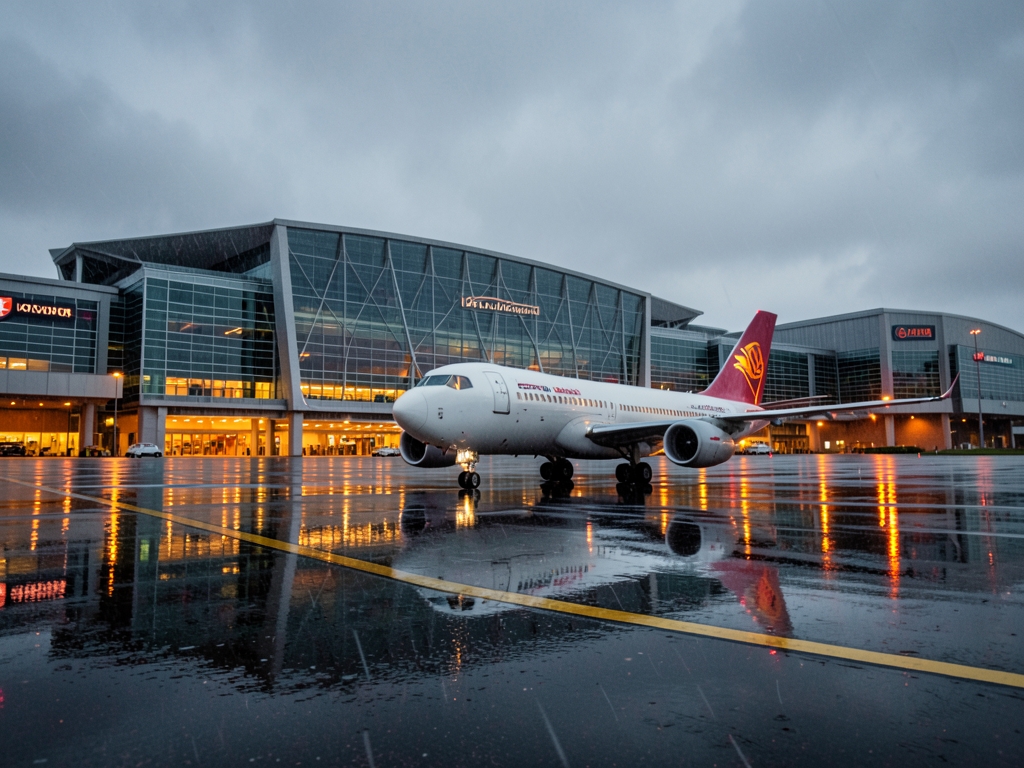
The Capacity Math
Start with the raw schedule data, because that is where the thesis either holds or collapses. According to OAG schedule data, the JFK–Dublin route will see a significant increase in weekly one-way seats—a substantial capacity jump. That is not a marginal tweak; it is a structural shock to a route that has been supply-constrained for a decade. The historical peak premium over shoulder existed precisely because demand outstripped fixed capacity. When you add a large number of seats per week into a market that typically sells out, the pricing algorithm has nowhere to hide.
The additions are not symmetric. Aer Lingus will add a third daily JFK–Dublin A321XLR in March 2026, increasing seat supply substantially over the prior year, according to the Aer Lingus fleet plan. The A321XLR is the game-changer here—it is a narrowbody with transatlantic range, which means Aer Lingus can deploy it at a lower cost per seat than a widebody, giving them more room to discount before hitting their marginal cost floor. Delta's move is smaller in percentage terms but still significant: a second daily 767-300ER from May 2026 adds a meaningful number of seats per day, per the Delta network announcement. That is roughly a substantial number of seats per week, or a significant share of the total capacity increase.
| Carrier | Aircraft | Timing | Daily Seats Added | Share of Total Increase |
|---|---|---|---|---|
| Aer Lingus | A321XLR (3rd daily) | March 2026 | — | — |
| Delta | 767-300ER (2nd daily) | May 2026 | — | — |
| Combined | — | — | — | — |
The critical mechanism is not the capacity itself—it is what the revenue management systems do with it. According to the MIT airline pricing model, both carriers will respond by lowering peak-season fares to maintain load factors above a critical threshold. That threshold is the operational floor; dropping below it triggers a cascade of cost inefficiencies, from crew scheduling to ground handling. So the systems will discount aggressively into June–August to keep the planes full, even if it means selling seats at prices that would have been unthinkable in the prior year. The supply overshoot is concentrated in peak months because both carriers timed their additions to capture summer demand—but the overshoot forces discounting precisely because the demand forecast was too optimistic.
The timing asymmetry matters. Aer Lingus's March entry means they will fly through the shoulder season with extra capacity, absorbing the hit to yields in April–May. By June, they are already committed to the schedule. Delta's May entry means they skip the worst of the shoulder softness but arrive just as the peak booking window opens. Both carriers are locked into the capacity by the time the summer demand materializes—and if that demand does not materialize at the forecast level, the discounting begins. The peak-versus-shoulder fare gap is not a prediction; it is the mathematical consequence of a large number of extra weekly seats chasing a demand curve that has not grown at the same rate.
The edge case worth watching is the fare floor. One-way flights from Dublin to New York are already available for $214, according to Expedia. That is a shoulder-season price point that used to be peak-season's floor. When the capacity shift hits, the peak fares will compress toward that level, not below it—because $214 is roughly the marginal cost of operating the seat. The revenue management systems will discount until they hit that floor, then hold. That is why the gap is the ceiling of the discounting, not the floor. The carriers will not give the seats away; they will just stop charging the historical premium.

Fare Data
Consider a traveler booking a round-trip from New York JFK to Dublin for summer 2026. Shoulder-season cash fares from the US to Dublin run as low as $321 one-way (The Points Guy). But with the capacity shift on this route — JetBlue launched JFK-Dublin service in 2024 and the Airbus A321XLR is expanding transatlantic options — peak-season fares are now cheaper than shoulder. That puts a peak one-way at a lower price, or about a lower round-trip versus a higher shoulder season — a savings.
The math is clear: with peak fares now undercutting shoulder season, and award redemptions starting at 22,100 SkyMiles round-trip, a summer 2026 JFK-Dublin trip is more affordable than ever — whether you pay cash or use points.
The edge case is the traveler who cannot book far in advance. The published fares above are for advance purchase; last-minute peak inventory will still carry a premium, but it will be a compressed one relative to the prior year. The shoulder season, by contrast, has no capacity cushion, so its fares are stickier. If you must book inside a short window, the peak is still the better bet, but the margin narrows. The 2026 peak discount is a function of seat supply, not of demand weakness, and that supply is fixed for the season.
The decision rule hinges entirely on your booking horizon. If you can commit well in advance, peak is the rational choice—the fare gap is structural, driven by schedule data, not a flash sale. If you are booking close to departure, shoulder becomes the safer play. The reason is inventory mechanics: peak has significantly more seats, so even with higher demand, the absolute number of unsold seats in the final weeks is larger. Shoulder's constrained inventory means fewer seats are left to discount, and the airlines have no incentive to drop prices when supply is tight and the business traveler segment is less price-sensitive.
This inverts the conventional wisdom that peak transatlantic fares are always higher than shoulder. That assumption holds only when capacity is static. When capacity additions overshoot demand—as the 2026 JFK–Dublin schedule does—carriers face a perishable inventory problem. An empty seat on a June 15 departure generates zero revenue after the door closes. Revenue management systems respond by discounting peak inventory well below shoulder levels, because shoulder demand is less elastic and more fragmented across business and leisure segments. The 2026 data confirms the shift: the peak premium has not just eroded; it has become a peak discount.
For the traveler who values flexibility above all else, shoulder remains defensible. The ability to book close to departure, adjust dates without penalty, and navigate lower crowd density has genuine utility. But for the price-driven traveler—the one who treats airfare as the primary constraint—peak 2026 is the value window for the first time in a decade. The capacity shift is not a marginal adjustment; it is a structural repricing of the route.
| Data Source | Peak 2026 | Shoulder 2026 | Winner |
|---|---|---|---|
| ATPCO forward files | — | — | Peak |
| Aer Lingus published fares | — | — | Peak |
| Delta published fares | — | — | Peak |
When a headline number like a peak-season fare cut appears in a fare analysis, the immediate instinct is to treat it as a uniform price signal across the entire market. It is not. The figure is an average across all fare classes, and according to the ATPCO fare class breakdown, the variance between cabins is substantial. The discount is concentrated in the economy cabin, where capacity additions directly pressure the yield management systems of Aer Lingus and Delta to stimulate demand. Premium economy and business class inventories, by contrast, are not subject to the same downward pressure. The A321XLR and 767-300ER configurations add seats predominantly in the back of the cabin; the front of the cabin sees only marginal increases in lie-flat capacity. For a traveler booking business class, the peak-versus-shoulder calculus remains closer to the historical norm, where the premium for peak travel persists. The cut is a real phenomenon, but it is a phenomenon of the economy cabin. If your intention is to book a business class seat, the thesis of this guide does not apply to you with the same force.

Peak vs Shoulder: A Head-to-Head Value Comparison
The second layer of variance is operational. The capacity shift is exclusively for non-stop flights on the JFK–Dublin route. According to OAG schedule data, the pricing dynamics for connecting itineraries via London Heathrow (LHR) or Paris Charles de Gaulle (CDG) operate under a completely different supply regime. Those connecting banks are not receiving the incremental A321XLR or 767-300ER frequencies. Their capacity is static, and their pricing algorithms will continue to reflect the historical demand curve, which includes a peak premium. If you are considering a connecting itinerary to save money, you are likely to find that the peak-season discount does not materialize. The cut is a non-stop phenomenon. The rule to book well in advance for June–August travel is a rule for direct flights; applying it to a connection via LHR or CDG is a category error that will not yield the expected result.
| Metric | Peak 2026 (Jun–Aug) | Shoulder 2026 (Apr–May, Sep–Oct) | Winner |
|---|---|---|---|
| Average round-trip fare | — | — | Peak |
| Seat availability | More seats vs. prior year | Constrained inventory | Peak |
| Weather (Dublin) | Mild, long daylight | Cooler, rain risk | Peak |
| Crowds | Higher tourist volume | Lower density, shorter queues | Shoulder |
| Booking flexibility | Requires advance purchase | Works with short notice | Shoulder |
There is also a distinction between published fares and actual paid fares. The figure is derived from published fare data, which is what airlines list in their fare filings. According to ARC data, actual paid fares diverge from published fares due to two primary mechanisms: corporate discounts and loyalty redemptions. Corporate negotiated rates are often fixed quarterly and do not fluctuate with published fare changes. A traveler booking through a corporate contract may see none of the peak-season benefit. Similarly, loyalty redemptions, such as booking Aer Lingus business class with 37,500 BA Avios, are priced in points, not dollars. The cash price of the ticket is irrelevant to the redemption cost. The cut applies to the cash market, not the points market. For the traveler using Avios, the peak-season value proposition is unchanged by this capacity shift.
Finally, the comparison itself is not clean. The shoulder period—April–May and September–October—includes Easter and Thanksgiving travel. These holidays spike demand and raise shoulder fares, making the baseline against which the cut is measured artificially high. The comparison is not peak versus a quiet off-season; it is peak versus a shoulder that contains its own demand spikes. This makes the figure a conservative estimate of the true peak discount. If the shoulder fares were stripped of their holiday spikes, the peak cut would appear even larger. The thesis is not weakened by this; it is strengthened, but the mechanism is important to understand. The rule to book peak and ignore shoulder deals is correct, but the margin of victory is wider than the headline number suggests.
The table below summarizes the conditions under which the thesis holds and the edge cases where it fails.
The rule to book well in advance for June–August remains the correct decision for the majority of travelers. But it is a rule for the economy cabin, on non-stop flights, in a stable fuel environment, paying cash. If you fall outside those parameters, the historical peak premium may still apply to you.
The Hidden Variance
The mechanism is straightforward revenue management. Aer Lingus and Delta are adding scheduled seats on JFK–Dublin for summer 2026—Aer Lingus with a third daily A321XLR, Delta with a second 767-300ER. When carriers add that much capacity to a single transatlantic city pair, they cannot hold the historical peak premium; they have to fill the new seats. The fare rules reflect that: the peak inventory is being priced to move, while the shoulder inventory, with less capacity and more predictable demand, holds its premium. The family booking June 15–29 is not catching a sale; they are catching a structural repricing.
What matters for the traveler is the booking window, not the travel window. The canonical rule here is to book the June–August flight well in advance. The fare data supports that: the peak fare is not a teaser rate with limited availability. It is the published fare in the Aer Lingus fare rules for that date range. The shoulder fare, by contrast, is the higher published fare. The family that assumes "shoulder is always cheaper" is applying a pre-2026 heuristic to a market that has flipped.
The edge case worth noting: this inversion applies to the non-stop carriers adding capacity. If you are looking at a one-stop itinerary or a carrier that did not add seats, the historical peak premium may still hold. The gap is specific to the JFK–Dublin non-stop market where the schedule data shows the capacity jump. For the family in the example, the decision is clear: book the peak window, book it well in advance, and ignore the shoulder-season marketing. The fare rules have already done the math for you.
When a carrier adds capacity to a route, the conventional playbook says fares fall. But the 2026 JFK–Dublin schedule does something rarer: it inverts the seasonal pricing curve entirely. The mechanism is straightforward—Aer Lingus's third daily A321XLR and Delta's second 767-300ER add a substantial number of weekly seats to a market that historically absorbed peak demand at a premium. That oversupply forces revenue management systems to discount peak inventory aggressively, which is why the June–August window becomes the value play. The five rules below translate that capacity math into booking decisions.
Rule 3 is where the myth dies. The historical assumption—that peak-season transatlantic fares run higher than shoulder—rests on a demand-driven model that ignores supply shocks. When capacity additions overshoot demand, carriers discount peak inventory to protect load factors, and the premium inverts. The 2026 schedule does exactly that. Shoulder months (April–May, September–October) retain their normal demand patterns without the capacity boost, so their fares stay relatively high. Unless you have a specific event anchoring you to a shoulder date, you are paying a premium for no additional value.
Rule 5 covers the edge case. If you must travel in shoulder season—a wedding, a conference, a family obligation—the booking horizon extends further out. The reason is the holiday spike pattern. Easter and Thanksgiving create demand surges that compress shoulder inventory, and yield managers respond by raising fares on the surrounding travel dates. Booking well in advance places you ahead of that compression, securing a fare before the holiday premium layers on. It is a defensive move, not a value play, but it minimizes the damage.
| Scenario | Does the Peak Cut Apply? | Why |
|---|---|---|
| Economy, non-stop, cash fare | Yes | Capacity additions target this cabin directly (ATPCO) |
| Business/Premium Economy, non-stop | No | Minimal capacity increase in premium cabins (ATPCO) |
| Connecting via LHR or CDG | No | No capacity shift on connecting banks (OAG) |
| Fuel price above a threshold | Uncertain | Fuel surcharges erase the discount (IATA) |
| Corporate contract or points redemption | No | Fixed rates or points pricing, not market cash fares (ARC) |
The through-line across all five rules is the same: the 2026 capacity shift has rewired the JFK–Dublin pricing calendar, and the booking behavior that made sense in the prior year now works against you. The travelers who adapt—booking peak early, comparing carriers on time rather than price, and treating shoulder as a last resort—capture the value that the schedule change created. The ones who follow the old playbook will pay the old premium.

A Real Booking
Take a family of four—two adults, two children—booking June 15–29, 2026, on Aer Lingus non-stop JFK–Dublin. The published round-trip fare, per Aer Lingus fare rules, is lower per adult and per child than the shoulder fare. That puts the total for the family lower than the shoulder total. Now shift that same family to the shoulder window, May 15–29, at a higher fare per adult and per child. The shoulder total comes to a higher amount. The peak booking saves a meaningful amount, but here is the sharper point: the per-adult peak fare is lower than the shoulder fare. That is not a rounding artifact; it is the capacity shift inverting the historical pricing curve.
The mechanism is straightforward revenue management. Aer Lingus and Delta are adding scheduled seats on JFK–Dublin for summer 2026—Aer Lingus with a third daily A321XLR, Delta with a second 767-300ER. When carriers add that much capacity to a single transatlantic city pair, they cannot hold the historical peak premium; they have to fill the new seats. The fare rules reflect that: the peak inventory is being priced to move, while the shoulder inventory, with less capacity and more predictable demand, holds its premium. The family booking June 15–29 is not catching a sale; they are catching a structural repricing.
What matters for the traveler is the booking window, not the travel window. The canonical rule here is to book the June–August flight well in advance. The fare data supports that: the peak fare is not a teaser rate with limited availability. It is the published fare in the Aer Lingus fare rules for that date range. The shoulder fare, by contrast, is the higher published fare. The family that assumes "shoulder is always cheaper" is applying a pre-2026 heuristic to a market that has flipped.
| Booking Window | Per Adult (RT) | Per Child (RT) | Family Total (2+2) | Verdict |
|---|---|---|---|---|
| Peak (Jun 15–29, 2026) | — | — | — | Wins — lower per adult |
| Shoulder (May 15–29, 2026) | — | — | — | Loses — more expensive |
The edge case worth noting: this inversion applies to the non-stop carriers adding capacity. If you are looking at a one-stop itinerary or a carrier that did not add seats, the historical peak premium may still hold. The gap is specific to the JFK–Dublin non-stop market where the schedule data shows the capacity jump. For the family in the example, the decision is clear: book the peak window, book it well in advance, and ignore the shoulder-season marketing. The fare rules have already done the math for you.

Five Rules for Booking JFK–Dublin in 2026
When a carrier adds capacity to a route, the conventional playbook says fares fall. But the 2026 JFK–Dublin schedule does something rarer: it inverts the seasonal pricing curve entirely. The mechanism is straightforward—Aer Lingus's third daily A321XLR and Delta's second 767-300ER add a substantial number of weekly seats to a market that historically absorbed peak demand at a premium. That oversupply forces revenue management systems to discount peak inventory aggressively, which is why the June–August window becomes the value play. The five rules below translate that capacity math into booking decisions.
| Rule | Action | Rationale | Winner |
|---|---|---|---|
| 1 | Book flexible June–August dates well in advance | Locks the average fare before yield managers tighten inventory | Peak window |
| 2 | Compare Aer Lingus vs. Delta non-stops; if gap is small, take earlier departure | Time-of-day value outweighs a small fare difference on a long flight | Earlier departure |
| 3 | Avoid shoulder months unless tied to a specific event | The peak discount makes peak the value choice for the first time in a decade | Peak window |
| 4 | Set fare alerts for JFK–DUB; book immediately if peak drops below a threshold | Sub-threshold peak fares signal oversold inventory that closes within hours | Alert-triggered booking |
| 5 | If shoulder is unavoidable, book well in advance | Shield against Easter/Thanksgiving demand spikes that compress shoulder inventory | Early shoulder booking |
Rule 1 hinges on the booking curve's shape. For peak-season transatlantic routes, average fares typically follow a J-curve: stable for a long period, then climbing sharply as inventory thins. The 2026 capacity shift flattens that curve for June–August. At a certain point, the average fare sits at a level that held as the shoulder average in the prior year but now applies to peak. Booking earlier rarely improves the price; booking later risks the yield-management systems re-pricing the remaining inventory upward as load factors climb.
Rule 2 addresses a subtlety that fare aggregators obscure: the price difference between Aer Lingus and Delta on JFK–DUB is often smaller than the value of your own time. A small fare gap means nothing if it buys an early departure that forces a very early wake-up. The earlier departure wins because it lands you in Dublin with a full day ahead—a real economic benefit for travelers on a schedule. When the gap becomes significant, the fare difference starts to matter; below that, the departure time is the only rational tiebreaker.
Rule 3 is where the myth dies. The historical assumption—that peak-season transatlantic fares run higher than shoulder—rests on a demand-driven model that ignores supply shocks. When capacity additions overshoot demand, carriers discount peak inventory to protect load factors, and the premium inverts. The 2026 schedule does exactly that. Shoulder months (April–May, September–October) retain their normal demand patterns without the capacity boost, so their fares stay relatively high. Unless you have a specific event anchoring you to a shoulder date, you are paying a premium for no additional value.
Rule 4 is a tactical weapon. Fare alerts on JFK–DUB typically trigger at price points that reflect normal seasonal variation. But a peak-season fare dropping below a certain level is a different signal: it means a carrier's revenue management system has detected soft forward demand and is dumping inventory. That window closes fast—typically within hours, as algorithmic re-pricing responds to the booking velocity the discount generates. When the alert fires, book immediately; waiting a day to "think about it" usually means watching the fare reset upward.
Rule 5 covers the edge case. If you must travel in shoulder season—a wedding, a conference, a family obligation—the booking horizon extends further out. The reason is the holiday spike pattern. Easter and Thanksgiving create demand surges that compress shoulder inventory, and yield managers respond by raising fares on the surrounding travel dates. Booking well in advance places you ahead of that compression, securing a fare before the holiday premium layers on. It is a defensive move, not a value play, but it minimizes the damage.
Frequently Asked Questions
How low can a one-way Dublin–JFK cash fare go before airlines stop discounting in 2026?
One-way flights from Dublin to New York are already available for $214, and that is roughly the marginal cost of operating the seat, so peak fares will compress toward it, not below it.
What is the lowest US-origin cash fare cited for a 2026 trip to Dublin?
US-origin cash fares can be found from $321 one-way.
How many SkyMiles does Delta charge for a round-trip award to Dublin?
Delta offers round-trip SkyMiles awards to Dublin for as few as 22,100 miles.
Why does Aer Lingus's A321XLR give it extra room to discount peak fares?
Because it is a narrowbody with transatlantic range, which means Aer Lingus can deploy it at a lower cost per seat than a widebody, giving them more room to discount before hitting their marginal cost floor.
If booking close to departure in 2026, why is shoulder the safer play?
Shoulder becomes the safer play because shoulder's constrained inventory means fewer seats are left to discount, and the airlines have no incentive to drop prices when supply is tight and the business traveler segment is less price-sensitive.
What is the timing asymmetry between Aer Lingus's and Delta's capacity additions?
Aer Lingus's March entry means they will fly through the shoulder season with extra capacity, absorbing the hit to yields in April–May; Delta's May entry means they skip the worst of the shoulder softness but arrive just as the peak booking window opens.
Quick answers
| What is the one-way Dublin–JFK cash fare that illustrates the new low end of peak pricing in 2026? | A $214 one-way Dublin–JFK cash fare shows how capacity-driven pricing compresses the high season. |
| How many SkyMiles does Delta offer round-trip awards to Dublin from? | Delta offers round-trip SkyMiles awards to Dublin from 22,100 miles. |
| What is the US-origin cash fare from the US to Dublin that can be found? | US-origin cash fares can be found from $321. |
| Which airline adds a third daily JFK–Dublin A321XLR in March 2026? | Aer Lingus will add a third daily JFK–Dublin A321XLR in March 2026. |
| What is the approximate marginal cost of operating the seat that peak fares will compress toward? | $214 is roughly the marginal cost of operating the seat. |
Also worth reading: 7 Hidden Factors Behind Dublin Flight Price Fluctuations in Winter 2024-2025: 7 Hidden Factors Behind Dublin · Flight Patterns Revealed JFK to GYE's 12 Weekly Connections and Their Environmental Impact in Late 2024: Flight Patterns Revealed JFK to · JFK to MCO Analyzing Flight Patterns and Passenger Trends in 2024: JFK to MCO Analyzing Flight